Latest from Hamzah & Marissa
-
I find it pretty crazy that there are domain registrars that charge for DNSSEC. Especially crazy if you aren't even using their DNS servers, and only want to add the DS records.
Read on → -

I showed the kids this method too! #solar #eclipse #solareclipse #solareclip2026 #london
Read on → -

Mandatory #Solar #Eclipse photo!That was so much fun. I remember the 1999 one when I was a kid, I didn't have the glasses to watch it with my own eyes, i had to watch on TV, so i was very disappointed. Glad we managed to get the glasses for this one.
Read on → -
I'm really tempted to 3D print this: https://www.printables.com/model/541367-sephiroths-masamuneand possibly a Buster Sword 😓 #FinalFantasy #FF7 #FF7R #PS5 #Gaming
Read on → -
Just started playing FF7: Rebirth.I heard that Rebirth isn't very good either story wise if you are expecting a "remake" (which I very much was).1 hour into it, I'm enjoying it so far. I might have to re-play Crisis Core again at some point.#FinalFantasy #FF7 #FF7R #PS5 #Gaming
Read on → -
Finished replaying Final Fantasy 7 Remake for the second time. This time I done all the side quests, and as many extra bits as possible and levelled up the characters up to 50 (max).I would still say I enjoyed it on my second play through.A bit disappointed that it's not really a "remake". I'm not a fan of all the alt-timeline, multiverse type stuff.#FinalFantasy #FF7 #FF7R #PS5 #Gaming
Read on → -

Finally bought Final Fantasy 7 Rebirth. It came with Remake as well. Its been so long since I played FF7 Remake, so I will play through that again first.I don't think i will be able to buy the next one on physical media, or second hand 😫 #ff7rebirth #ff7remake #ps5 #gaming #ff7
Read on → -
Z Tilt Adjust! #3dprinting #klipper3d
Read on → -
Somewhere Between Excited and Terrified: A DevOps Engineer on AI Anxiety
I want to be clear about what this post is before you read it. Nothing in here is new. Everything I am about to say has already been said, probably better, by someone else.
Read on → -
Grafana Alloy in My Homelab: Why I Run Three Separate Instances
When I set up Grafana Alloy across my homelab Kubernetes cluster, the first question was: how many instances do I actually need? Most tutorials show a single Alloy deployment handling everything. That works for a proof of concept but it papers over a real architectural question — one that comes down to a single word: clustering.
Read on → -
Parenting Like a DevOps Engineer: Managing the Chaos of Family Life
Father’s Day just passed, which got me thinking—not just about fatherhood in general, but how weirdly useful my job as a DevOps engineer has been in helping me parent. I have three kids: two sons (8 years old, and 6 years old), and one daughter (4 years old). They’re amazing, unpredictable, and chaotic—kind of like a Kubernetes cluster that’s constantly in flux, demanding constant monitoring, quick rollbacks, and a whole lot of automation to keep from spiralling into an unmanageable mess.
Read on → -
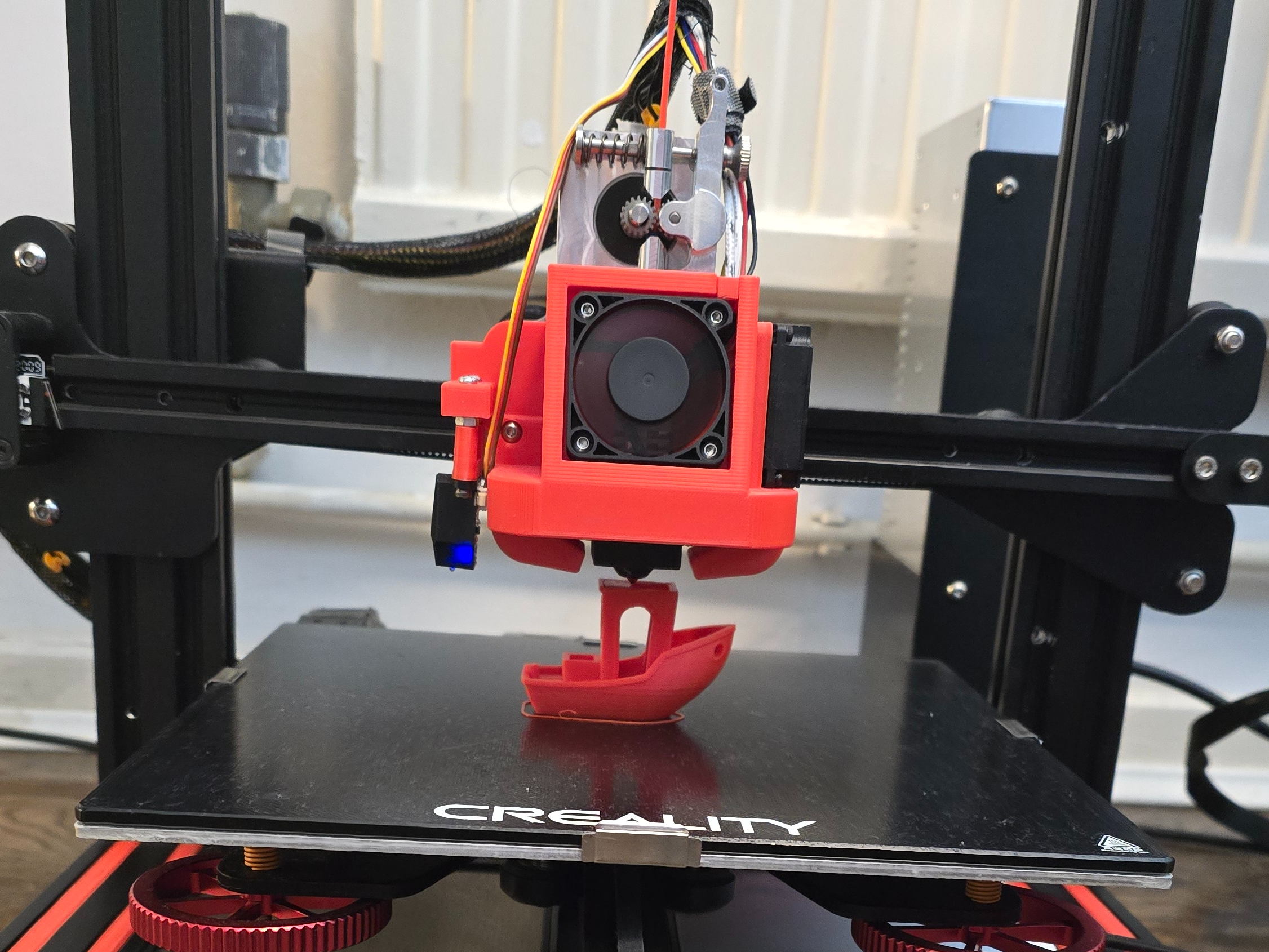
Reviving My Broken Ender 3
Introduction Link to heading In my previous post, I introduced the two second-hand Ender 3 printers I recently acquired. One was completely stock and fully operational, while the other had a variety of upgrades — but was non-functional. I decided to take on the challenge of restoring and improving the broken Ender 3, ordering a range of replacement parts that would not only get it printing again but also enhance its performance.
Read on → -
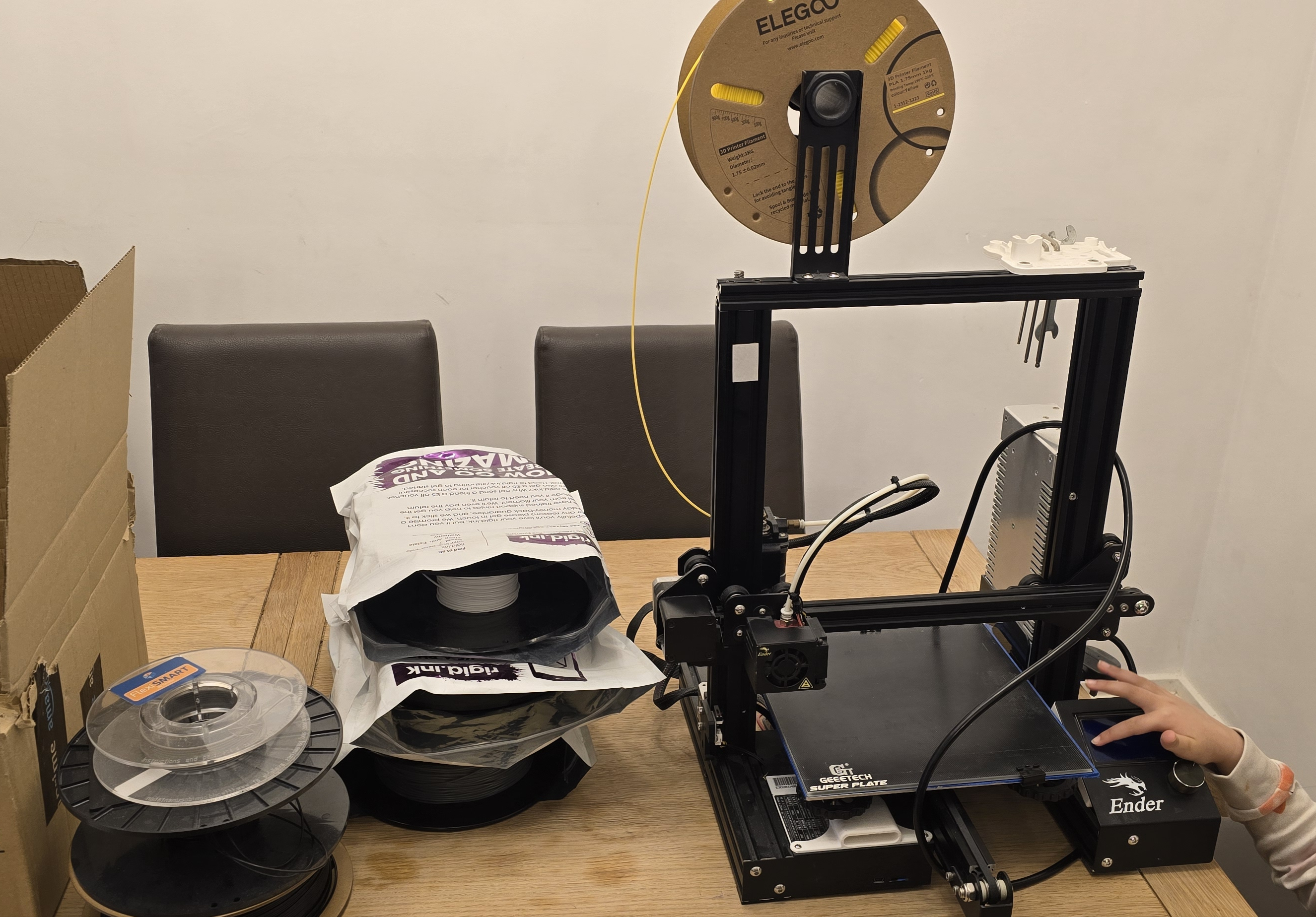
Starting My 3D Printing Journey in 2025 with the Ender 3: Klipper, Tinkering, and Endless Upgrades
Introduction Link to heading I’ve been fascinated by 3D printing for years, but I always hesitated—would I actually use it enough to justify the cost? It’s easy to get swept up in the hype of new hobbies, only to let gadgets gather dust. Recently, while browsing Facebook Marketplace, I stumbled across a deal that seemed too good to pass up — an original stock Ender 3 with a few spools of PLA and TPU for just £50.
Read on → -
VyOS DNS Redirection: Force Every Device to Use Pi-hole
Smart devices like Chromecasts and TVs often use hardcoded DNS servers that bypass your custom DNS filters like Pi-hole or Blocky. In this guide, you’ll learn how to configure VyOS NAT rules to intercept and redirect all DNS requests to your preferred DNS server — even if the client tries to bypass it. I use Blocky as my DNS server on my home network, but this should work with Pi-Hole and any other DNS server as well.
Read on → -
VyOS HAProxy Configuration: Reverse Proxy & Load Balancer
VyOS, the robust open-source network operating system, has recently introduced an exciting new capability – the ability to function as a load-balancing reverse proxy. This integration leverages the power of HAproxy, a battle-tested proxy server, and load balancer, providing VyOS with powerful reverse proxy and application load balancing functionality. While this integration is still in its early stages, and lacks many features, it presents exciting features that will hopefully improve with time.
Read on → -
VyOS WireGuard VPN Server Setup (Road Warrior Config)
In our modern, hyper-connected world, where remote work and global access are increasingly vital, the need for secure connectivity to your home or office network has evolved from a luxury to an essential requirement. Whether you’re a professional in need of remote access to an office network or a passionate home lab enthusiast managing various services, a road-warrior style VPN is your key to top-tier, secure and hassle-free remote server access from anywhere in the world. Regardless of if you are managing a personal web server, delving into home automation experiments, or overseeing your own cloud services, this guide serves as your trusty roadmap, expanding on the principles covered in our previous post about establishing a site-to-site VPN with WireGuard and VyOS.
Read on → -
VyOS WireGuard Configuration: Site-to-Site VPN & OSPF
Connecting two sites securely and efficiently is essential for many businesses and individuals. In this post, we’ll explore how to achieve seamless connectivity between two locations using the powerful combination of WireGuard, a modern and high-performance VPN protocol, and VyOS, a robust and versatile network operating system. Whether you’re looking to enhance communication between remote offices, create a secure link between your data center and a cloud-based infrastructure, or simply want to connect two geographically separated sites, this guide will walk you through the process, ensuring a reliable and secure connection every step of the way.
Read on → -
Using FreeIPA CA as an ACME Provider for cert-manager
I’m using FreeIPA for authentication services in my home lab. It’s extreme overkill for my situation, as I don’t have many users (mainly just me!) but alas I like overkill. :) I am using FreeIPA’s DNS service to host some DNS subdomains for internal services.
Read on →
